Why the Malacca Strait Has Become the World Economy’s Next Major Vulnerability

After the shock waves caused by disruption in the Hormuz Strait, governments and shipping companies are turning their attention to Southeast Asia, where one of the narrowest and busiest maritime corridors on Earth carries the lifeblood of global trade.
The temporary blockade and instability around the Hormuz Strait sent a clear warning across international markets: the modern global economy remains dangerously dependent on a handful of narrow maritime passages. Oil prices jumped, insurance costs soared, shipping routes were delayed, and supply chains once again showed how fragile they can become when a single corridor is threatened.
Now, attention is rapidly shifting eastward toward another strategic bottleneck — the Malacca Strait.
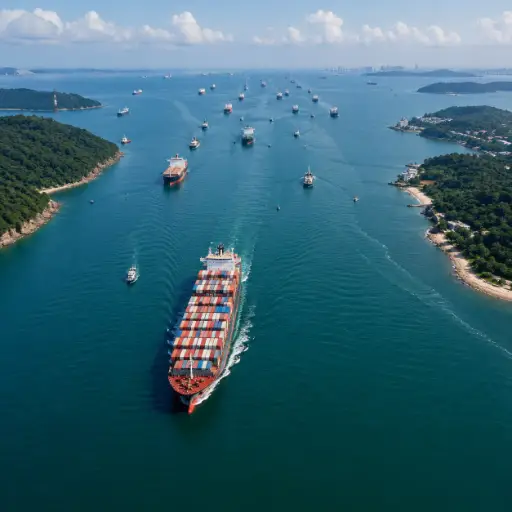
Stretching between Malaysia, Singapore, and Indonesia, the strait is one of the busiest shipping lanes in the world. Roughly a quarter of global maritime trade passes through these waters, including massive volumes of oil, liquefied natural gas, electronics, food supplies, and industrial components that connect Asian factories to consumers across Europe, the Middle East, and North America.
At its narrowest navigable point, the channel measures only about 2.7 kilometers wide. For maritime analysts and military planners, that figure alone explains why the region has become a growing source of concern.
Unlike the Hormuz Strait, which is heavily associated with energy exports from the Gulf, the Malacca Strait represents something even broader: the central artery of Asian manufacturing and international container shipping. Any major disruption there would ripple far beyond energy markets. It would directly affect supermarket shelves, automobile production, semiconductor deliveries, and the movement of countless everyday goods.
Security experts warn that the risks are no longer theoretical.
Rising geopolitical tensions in the Indo-Pacific, combined with increased naval activity and growing rivalry between major powers, have intensified concerns about the security of Southeast Asian sea lanes. At the same time, piracy, cyberattacks on shipping infrastructure, maritime accidents, and environmental hazards remain persistent threats in one of the most congested waterways on the planet.
The strait already handles thousands of vessels every year, from giant oil tankers to enormous container ships carrying goods valued in the billions of dollars. In several sections, traffic moves through extremely tight corridors, leaving little room for navigational error. A single accident involving a grounded vessel could disrupt global shipping flows within hours.
Shipping companies still remember the impact caused when the Ever Given container ship blocked the Suez Canal. Although that incident occurred elsewhere, it demonstrated how quickly international commerce can descend into chaos when one narrow maritime route becomes unusable. Ports became congested, delivery schedules collapsed, and manufacturers faced shortages that lasted for months.
Analysts say a comparable disruption in the Malacca Strait could potentially produce even wider consequences.
Asian economies would likely feel the first shock. China, Japan, and South Korea remain heavily dependent on the route for imported energy and exported goods. China in particular has long described the issue as the “Malacca dilemma” — a recognition that much of its economic stability relies on a corridor that could theoretically be disrupted during a crisis.
This vulnerability has pushed Beijing to invest aggressively in alternative trade routes. China has expanded rail links across Central Asia, increased investment in ports throughout the Indian Ocean, and accelerated development projects connected to the Belt and Road Initiative. Pipelines through Myanmar and overland transport corridors are also designed partly to reduce dependence on the strait.
Other countries are pursuing similar strategies.
India has strengthened its naval presence near the Andaman and Nicobar Islands, which sit close to the western entrance of the strait. Singapore continues investing heavily in port modernization and maritime surveillance technologies. Indonesia and Malaysia have increased patrol cooperation to combat piracy and improve navigation safety.
Despite these efforts, experts acknowledge there is currently no realistic substitute capable of replacing the Malacca Strait’s capacity.
Alternative routes around Indonesia add considerable travel time and fuel costs. Air freight cannot absorb the enormous volume handled by maritime shipping. Rail connections remain limited compared with the scale of ocean transport. In practice, the world economy still depends overwhelmingly on uninterrupted maritime movement through a handful of strategic chokepoints.
That dependence is becoming increasingly uncomfortable for governments already dealing with economic uncertainty, inflation pressures, and fragile supply chains left weakened by years of global disruption.
Insurance markets have already begun adjusting to the new geopolitical reality. Maritime insurers are paying closer attention to routes crossing strategic bottlenecks, while logistics companies are revising contingency plans in anticipation of future crises. Some multinational corporations are also reconsidering the concentration of manufacturing operations in single regions, fearing that future shipping disruptions could once again paralyze production.
Yet the challenge extends beyond economics.
The Malacca Strait has quietly become one of the most strategically sensitive areas in the world. The growing military presence of regional and global powers reflects a broader understanding that control over maritime trade routes increasingly means influence over the global economy itself.
For decades, globalization relied on the assumption that goods could move freely and cheaply across oceans with minimal interruption. That assumption now appears far less certain.
The lesson from Hormuz was not simply about oil. It was about vulnerability. A narrow passage on the map can suddenly become the focal point of global instability, capable of affecting everything from fuel prices to food distribution.
The Malacca Strait may now represent the clearest example of that reality.
As cargo vessels continue flowing through one of the world’s narrowest maritime arteries, governments and businesses alike are confronting an uncomfortable truth: the global economy remains only one blocked waterway away from another major shock.