As Trump Declares Hostilities “Terminated,” Competing Blockades and Unresolved Nuclear Demands Keep the Region on Edge

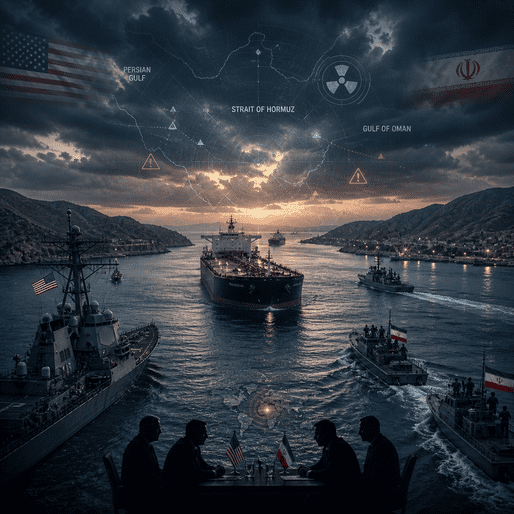
The armed conflict between the United States, Israel, and Iran has entered a tense, fragile ceasefire, but the region remains in a state of “no war, no peace.” What began as Operation Epic Fury—a joint U.S.-Israeli campaign of airstrikes on February 28 aimed at dismantling Iran’s nuclear and ballistic missile programs—has devolved into a protracted standoff, with the Strait of Hormuz, a critical global oil chokepoint, at the heart of the crisis.
A conditional ceasefire, brokered by Pakistan and declared on April 7, has largely held, with no direct exchange of fire between U.S. and Iranian forces for over three weeks. However, President Donald Trump has rejected Iran’s latest proposal to resolve the conflict, stating he is “not satisfied” with the terms. The core of the dispute lies in Iran’s demand that the U.S. lift its naval blockade on Iranian ports as a precondition for reopening the Strait of Hormuz. Conversely, the U.S. insists that nuclear and missile negotiations be central to any deal, demands Iran has refused, declaring the “nuclear file is closed.”
“The ceasefire is not peace,” said a senior U.S. official familiar with the talks. “Iran is using this pause to reconstitute its military capabilities, clearing debris at missile bases and preparing for a potential resumption of hostilities.”
Indeed, intelligence reports confirm Iran is actively recovering hidden weapons and missile launchers, while its new Supreme Leader, Mojtaba Khamenei, has framed control of the Strait as a non-negotiable “right” and a pillar of Iran’s regional strategy. This intransigence has frustrated U.S. diplomats. Iran’s latest proposal, delivered via Pakistani mediators on April 30, reportedly calls for simultaneous talks on reopening the Strait and ending the U.S. blockade, while deferring nuclear issues to a later stage and ruling out missile negotiations entirely.
The humanitarian and economic toll of the conflict is mounting. The closure of the Strait has triggered a global fuel crisis, prompting the International Energy Agency to release 400 million barrels of oil. Within Iran, the economy is in freefall, with the rial plunging to a record low. While the regime blames U.S. sanctions and the blockade, analysts point to decades of mismanagement and corruption by the Islamic Revolutionary Guard Corps (IRGC) as the root cause. Meanwhile, the conflict in Lebanon between Israel and Hezbollah continues to simmer, with Israeli strikes killing civilians on May 2, highlighting the war’s dangerous spillover.
President Trump, in a letter to Congress dated May 1, declared that the “hostilities” have “terminated,” effectively arguing that the 60-day War Powers Resolution deadline has expired. This move, intended to sidestep congressional oversight, has been met with fierce criticism from Democrats, who call it “bullshit” and warn of an unchecked executive. The administration maintains its military posture, with U.S. forces continuing to turn away vessels bound for Iran.
As the world watches, the ceasefire hangs by a thread. With both sides digging in on their core demands—regime change and nuclear disarmament for the U.S., and sovereignty and economic survival for Iran—the path to a lasting peace remains shrouded in uncertainty. The current stalemate is not a resolution, but a dangerous pause in a conflict that could reignite at any moment.


