Trump announces humanitarian naval effort to free 850 trapped vessels as Tehran warns against interference, while global oil prices surge and peace talks remain fragile.

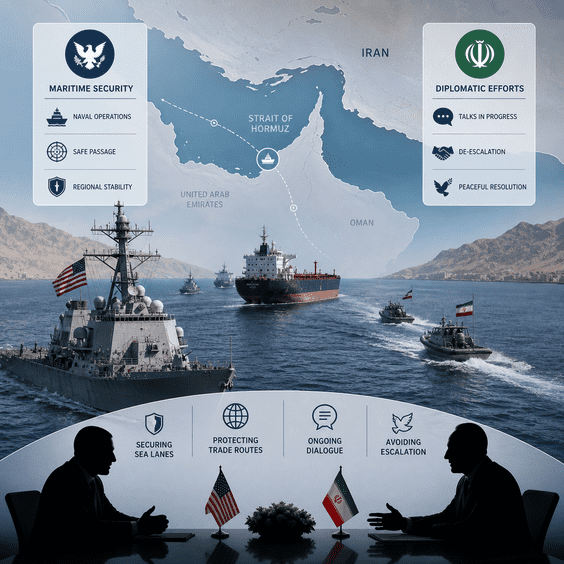
WASHINGTON — President Donald Trump has announced a new US naval operation, dubbed “Project Freedom,” designed to guide more than 850 commercial vessels currently trapped in the Gulf of Persian out through the Strait of Hormuz. The initiative, described by the White House as a humanitarian gesture, aims to free an estimated 20,000 sailors stranded since a blockade was imposed nearly a month ago.
In a post on his social media platform, Truth Social, on Monday morning, Trump stated that the United States would use its “best efforts” to ensure the safe passage of ships and crews. He characterized the mission as a benefit to the United States, Middle Eastern nations, and specifically Iran, noting that representatives were engaged in “very positive” discussions with Tehran.
“I have told my Representatives to inform them that we will use best efforts to get their Ships and Crews safely out of the Strait. In all cases, they said they will not be returning until the area becomes safe for navigation, and everything else.”
However, the operational details remain opaque. While a statement from US Central Command (CENTCOM) confirmed the deployment of 15,000 service members, guided-missile destroyers, and over 100 aircraft to support the mission, it did not specify how these assets would facilitate the passage. A senior US official told the Wall Street Journal that the plan does not currently involve US Navy warships escorting convoys through the strait, but rather focuses on coordinating traffic among shipping stakeholders.
Diplomatic Tensions and Warnings
The announcement follows a period of mixed signals from the White House. While Trump praised the diplomatic channels on Monday, he expressed skepticism just days prior, questioning whether Iran had “paid big enough price” for past actions. This volatility has fueled speculation about a potential resumption of hostilities.
The reception from Tehran has been cautious. A senior Iranian official warned that any US attempt to physically enter or interfere within the Strait of Hormuz would be viewed as a breach of the current ceasefire. Simultaneously, Israeli state broadcaster Kan News reported that Trump had reviewed a new 14-point peace proposal from Iran and deemed it “unacceptable,” contradicting the President’s public optimism.
French President Emmanuel Macron, speaking to European leaders in Armenia, emphasized that a coordinated reopening by both Washington and Tehran was the only viable path forward. “We are not going to take part in any military operation in a framework that to me seems unclear,” Macron stated.
Economic and Strategic Stakes
The stalemate in the Strait of Hormuz, a critical chokepoint for 20% of the world’s oil and gas supplies, has had severe economic repercussions. Oil prices climbed to over $120 a barrel last week, threatening a global economic slowdown and putting political pressure on the Trump administration ahead of the November congressional elections.
The blockade was initially implemented by Iran following a US-Israeli strike on February 28. In retaliation, Trump imposed a counter-blockade on April 13 targeting ships using Iranian ports. A Pakistan-brokered ceasefire halted direct hostilities three weeks ago but failed to resolve the maritime impasse.
Iran’s latest 14-point proposal, presented via Pakistan, reportedly includes demands for compensation for war damages, the lifting of sanctions, and a cessation of hostilities in neighboring Lebanon. While the Iranian foreign ministry confirmed receipt of a US response, the specifics of Washington’s reply remain undisclosed.
Regional Flashpoints and Troop Movements
Beyond the Gulf, tensions remain high across the region. In southern Lebanon, Israel has ordered evacuations in response to ongoing exchanges of fire with Hezbollah, despite a declared ceasefire. The Lebanese health ministry reported 20 fatalities and 46 injuries from Israeli strikes over a 24-hour period ending Sunday.
Domestically and in Europe, the President’s actions are creating friction. Trump signaled a significant reduction in US troops stationed in Germany, a move that has drawn sharp criticism from Republican leadership in Congress. They argue that withdrawing forces risks undermining deterrence against Russia and violates statutory minimums for troop levels in Europe.
As the US maintains three aircraft carriers in the Middle East for the first time since 2003, the international community watches closely. The success of “Project Freedom” could de-escalate a crisis threatening global energy security, while failure or miscalculation could reignite a conflict that has already defied diplomatic solutions for weeks.