The Italian brand’s first major women’s fragrance in 15 years reflects a wider luxury trend: younger consumers want identity, affordability, and emotional storytelling as much as status.

Diesel is returning to the women’s fragrance market with Only Desire, its first major women’s scent launch in 15 years, as fashion houses increasingly turn to beauty as a strategic gateway to younger consumers. The fragrance, launched globally online and in Diesel stores, is backed by L’Oréal Group and designed under creative director Glenn Martens.
The move comes at a moment when luxury fashion is under pressure from slower spending, price fatigue, and more selective shoppers. For brands such as Diesel, fragrance offers a more accessible way to expand the customer base: a consumer who may not buy a luxury bag or runway piece can still enter the brand universe through scent.
Only Desire is priced at €75 for a 30ml bottle, positioning it below the psychological €100 threshold that remains important for younger, price-sensitive shoppers. L’Oréal’s Sandrine Groslier told Vogue Business that fragrances below €100 are among the fastest-growing categories, making the product both a commercial bet and a brand-building tool.
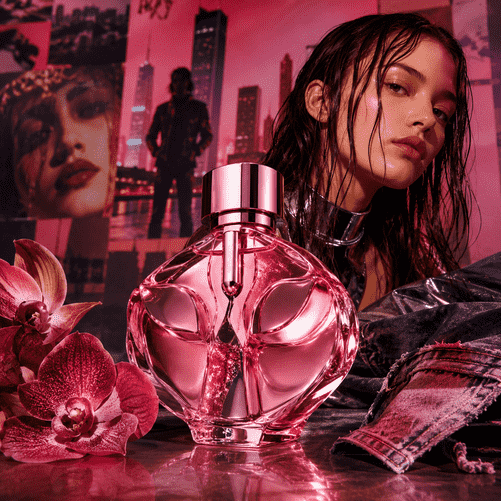
The design also reflects Diesel’s current identity. The bottle resembles a pierced-open orchid, a symbol meant to connect femininity, desire, and resilience with the brand’s provocative aesthetic. Under Martens, Diesel has leaned into denim, irony, sexuality, and youth culture, helping reposition the label as what many observers describe as “alternative luxury.”
The Gen Z strategy is explicit. According to Vogue Business, 36% of Diesel’s customer base is now Gen Z, while 70% of its new consumers are women. That shift matters because fragrance is increasingly used by young shoppers not only as a beauty product, but as a form of personal identity. Rather than owning one signature scent, many younger consumers build a “fragrance wardrobe,” switching scents by mood, occasion, or online persona.
Diesel is also using celebrity and digital culture to amplify the launch. Actress and singer Dove Cameron is part of the global campaign, while key markets include the United States, France, China, and Japan. The goal is not simply to sell perfume, but to turn fragrance into a portable expression of the Diesel lifestyle.
The launch fits a broader industry pattern. Maison Margiela, another L’Oréal-backed fashion house, recently moved into ultra-premium fragrance with its Scentsorium Collection, showing how brands are using scent to create emotional, collectible, and design-led products at different price points.
For the luxury and fashion market, the lesson is clear: the next battle for young consumers may not begin with handbags, shoes, or ready-to-wear. It may begin with fragrance—affordable enough to buy, intimate enough to feel personal, and powerful enough to turn a casual customer into a loyal follower.
Diesel’s Only Desire is therefore more than a perfume launch. It is a signal that in 2026, fashion brands are increasingly selling identity through beauty, and Gen Z is becoming the audience that decides which luxury names feel culturally alive.