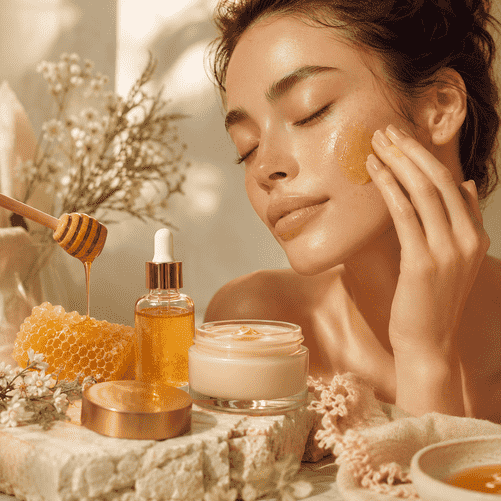
As consumers look for gentler products that address inflammation, sensitivity and barrier repair, one of the world’s oldest natural ingredients is being reintroduced as a modern skincare solution.

Honey is having a beauty revival.
Long associated with traditional remedies, wound care and homemade masks, honey is now being repositioned by skincare brands as a serious ingredient for the age of sensitive skin. As consumers grow more cautious about harsh actives and overcomplicated routines, beauty companies are turning to honey, especially mānuka honey, for its reputation as a soothing, hydrating and anti-inflammatory ingredient.
The timing is not accidental. The skincare market has shifted away from aggressive exfoliation and toward barrier repair, inflammation control and products designed for reactive skin. After years of retinoids, acids and high-performance routines, many consumers are now looking for formulas that calm redness, support hydration and reduce irritation. Honey fits neatly into that demand because it carries both ancient credibility and modern scientific appeal.
Research has linked bee-derived ingredients, including honey and propolis, with antibacterial, antioxidant and anti-inflammatory properties, which helps explain why beauty brands are giving them renewed attention. In skincare, honey is also valued as a humectant, meaning it helps draw and retain moisture, making it especially attractive for dry, stressed or sensitive complexions.
Mānuka honey has become the most fashionable version of the ingredient. Sourced from bees that pollinate the mānuka plant, native to New Zealand and Australia, it has gained a premium reputation in both wellness and beauty. Recent coverage has highlighted its appeal for people with sensitive or acne-prone skin, citing its moisturizing, soothing and antibacterial profile.
The trend is also being driven by newer brands built almost entirely around honey. Aunu, launched in 2025, uses medical-grade mānuka honey across its skincare line and positions the ingredient as central to barrier support and sensitive-skin care. The brand’s products have been marketed around soothing, antimicrobial and antioxidant benefits, reflecting how honey is being elevated from rustic natural remedy to luxury skincare technology.
Established beauty players are participating as well. Honey-based formulas now appear in cleansers, creams, balms, masks and salves, often paired with ingredients such as glycerin, hyaluronic acid, oils or ceramides. The message is clear: honey is no longer being sold merely as a sweet natural additive, but as a functional ingredient in products designed to protect and repair the skin barrier.
The renewed interest also reflects a broader cultural preference for ingredients that feel familiar and “safe.” In an industry crowded with complex scientific language, honey offers an unusually simple story. Consumers understand it. They associate it with nourishment, healing and comfort. That emotional familiarity gives brands a powerful marketing advantage.
Still, experts urge caution. Honey can be beneficial in well-formulated skincare, but not every product containing honey will deliver the same results. The concentration, type of honey, formulation quality and supporting ingredients all matter. Dermatologists also warn that people with allergies to bee products should be careful, and that severe skin conditions should not be treated with beauty products alone.
The real significance of honey’s comeback is what it says about the beauty industry’s current direction. Consumers are no longer chasing only brightness, tightness or dramatic resurfacing. They are increasingly looking for resilience: skin that feels calm, hydrated and less inflamed.
That makes honey a perfect ingredient for the moment. It combines heritage with science, softness with performance, and natural appeal with luxury branding. In a market obsessed with the future of beauty, one of its oldest ingredients has suddenly become modern again.