Two migrants have taken Rome to the European Court of Human Rights, accusing Italy of denying them justice by failing to enforce an international arrest warrant

Italy is facing renewed legal and political pressure over its controversial decision to release a Libyan militia chief wanted by the International Criminal Court, after two migrants filed cases at the European Court of Human Rights accusing Rome of breaching their rights.
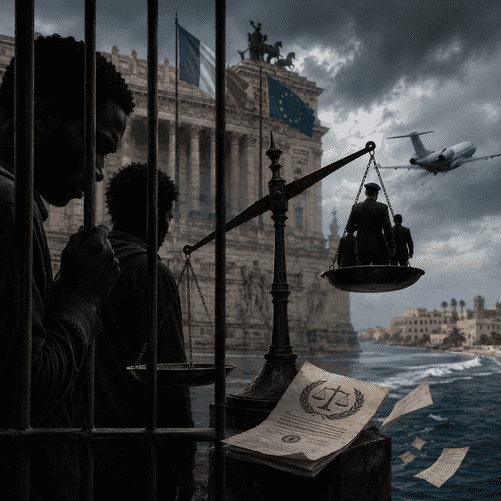
The case centres on Osama Elmasry Njeem, also known as Almasri, a senior Libyan security figure accused by international prosecutors of grave abuses against detainees, including migrants held in Libya’s detention system. He was arrested in Turin in January 2025 under an international warrant, but was released within days and flown back to Libya on an Italian state aircraft.
The decision triggered outrage among human rights groups, opposition politicians and legal experts, who argued that Italy had failed to meet its obligations to cooperate with the International Criminal Court. The Italian government defended its handling of the case, citing procedural problems with the warrant and national security considerations.
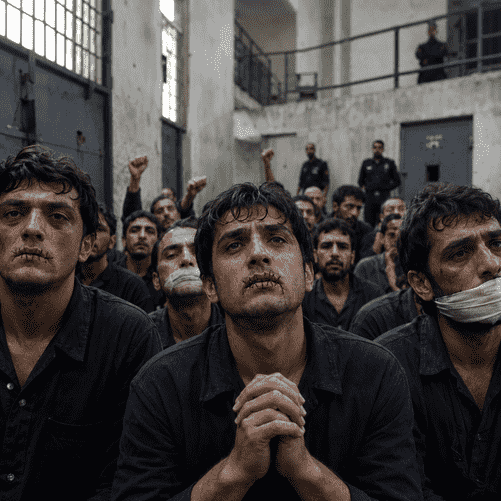
Now, the dispute has moved to the European Court of Human Rights. The two applicants, migrants who say they suffered abuse in Libyan detention, argue that Italy’s failure to surrender Almasri deprived them of access to justice and violated their fundamental rights. Their complaint frames the release not only as a diplomatic controversy, but as a direct injury to alleged victims seeking accountability.
The case is likely to intensify scrutiny of Italy’s migration policy, particularly its cooperation with Libyan authorities to curb Mediterranean crossings. For years, Rome has supported Libya’s coastguard and security structures as part of a broader strategy to prevent migrants from reaching Europe. Human rights organisations have repeatedly warned that this policy risks making European governments indirectly complicit in abuses committed against migrants intercepted at sea and returned to Libyan detention centres.
Almasri’s release has become a symbol of that wider dilemma. To critics, the episode shows how migration control can collide with international justice. They argue that European governments cannot condemn abuses in Libya while relying on the same security networks to manage migration flows.
For Prime Minister Giorgia Meloni’s government, the case is politically sensitive. Italy has made migration control a central pillar of its domestic and foreign policy, and maintaining cooperation with Libyan actors is considered crucial to reducing arrivals across the central Mediterranean route. But the legal challenge before the European court could force Rome to answer whether those priorities came at the expense of victims’ rights.
The Italian authorities have maintained that the release was linked to defects in the legal procedure surrounding the arrest warrant. However, rights groups say that explanation does not resolve the broader question of why a man wanted by the ICC was allowed to leave Italian territory instead of being held while the issue was clarified.
The European Court of Human Rights will not decide the criminal allegations against Almasri. Its role will be to examine whether Italy violated the rights of the applicants through its actions or omissions. Even so, the case could have wider consequences, potentially shaping how European states handle international arrest warrants involving alleged abuses against migrants.
The proceedings also arrive at a time when accountability for crimes committed in Libya is receiving renewed international attention. The ICC has continued to pursue cases linked to Libya’s detention system, where migrants, refugees and political prisoners have allegedly been subjected to torture, sexual violence, forced labour and other abuses.
For the two migrants bringing the case, the issue is simple: they say Italy had a chance to help deliver justice and failed to do so. For Rome, the case raises uncomfortable questions about the balance between legal obligations, diplomatic interests and border-control policy.
Whatever the outcome, the challenge before the European Court of Human Rights ensures that the Almasri affair will not remain a closed chapter. Instead, it has become part of a larger reckoning over Europe’s relationship with Libya — and over the price paid by migrants trapped between security deals and the search for justice.